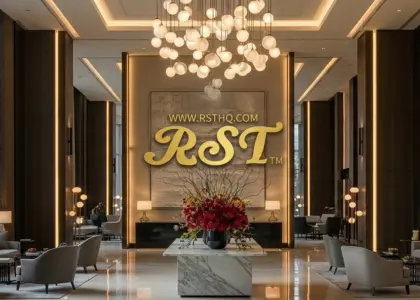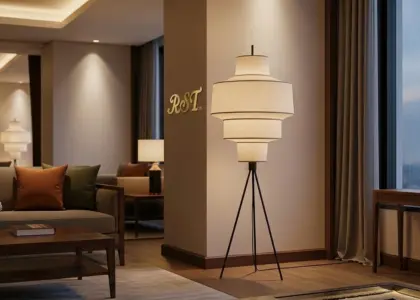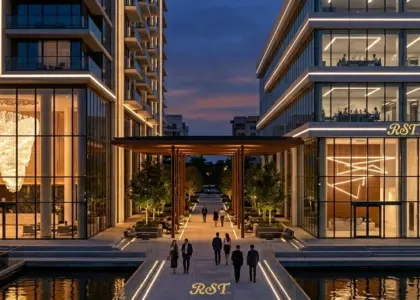
In the competitive landscape of international hospitality and high-end real estate development, the ambient environment is no longer a static background—it is a dynamic service. For interior designers, architects, and project developers, the implementation of B2B Smart Lighting Integration Systems has become a pivotal factor in defining luxury and operational excellence. The modern guest or executive no longer seeks just a well-lit room; they demand an intuitive, responsive environment that adapts to their circadian rhythms and functional needs.
At RST, we recognize that the primary pain point for B2B buyers is the complexity of choice. With countless IoT protocols and hardware options, selecting a system that is both technologically robust and aesthetically sympathetic to architectural intent is a significant challenge. This guide explores how integrated lighting solutions act as a force multiplier for guest satisfaction and property value.
1. Beyond Illumination: Solving Design and Operational Pain Points
The traditional approach to lighting often leads to “control fragmentation”—where multiple switches, dimmers, and separate systems for HVAC and drapes create a confusing interface for the end-user.
Human-Centric Lighting (HCL) and Wellness
One of the most significant trends in luxury hospitality is the integration of Human-Centric Lighting. By utilizing B2B Smart Lighting Integration Systems, designers can automate the transition of color temperature throughout the day.
- Circadian Rhythm Support: Systems can be programmed to provide cool, energizing light at 5000K during the morning and transition to a warm, melatonin-supporting 2200K in the evening.
- The RST Advantage: Our integrated drivers ensure flicker-free dimming down to 0.1%, providing a level of visual comfort that standard commercial systems cannot replicate.
Operational ROI through Energy Intelligence
For developers, the “Smart” in lighting integration translates directly to the bottom line. Integrated systems allow for:
- Occupancy Sensing: Lights in corridors or common areas can dim to 10%-20% capacity when no motion is detected, saving thousands in annual utility costs.
- Metric/Imperial Precision: Our centralized hubs can manage up to 500 nodes across a floor area of 2,000 square meters (approx. 21,527 square feet), ensuring scalable performance for massive commercial footprints.
2. Targeted Application Scenarios for Professional Buyers
Luxury Hospitality: The “Frictionless” Arrival
In the hotel sector, the guest experience begins the moment the door opens. A pre-set “Welcome Scene” activated by the smart lock can slowly fade up the lights, adjust the climate, and open the motorized curtains. By utilizing [RST’s Hospitality Integration Series], developers ensure that technology remains an invisible luxury rather than a technical hurdle for the guest.
High-End Office Spaces: Productivity and Branding
In the corporate world, lighting is a tool for talent retention. Integrated systems in boardrooms can be synced with video conferencing software—automatically adjusting the “key light” for the best on-camera appearance of participants. Furthermore, [Sustainable Office Lighting Systems] help corporations meet their ESG (Environmental, Social, and Governance) targets by providing detailed energy-use reports.
Multi-Family Residential Developments
For architects of premium residential towers, smart lighting is a key selling point. Providing a “Smart-Ready” infrastructure allows residents to customize their lighting scenes via a single architectural wall station or a smartphone app, reinforcing the building’s status as a top-tier development.
3. Engineering for Trust: The E-E-A-T Foundation of RST Systems
The reliability of a B2B Smart Lighting Integration System is determined by its weakest link. RST eliminates these vulnerabilities through rigorous engineering:
- Interoperability: Our systems use open protocols (DALI-2, Matter, Zigbee 3.0), ensuring they play well with third-party Building Management Systems (BMS).
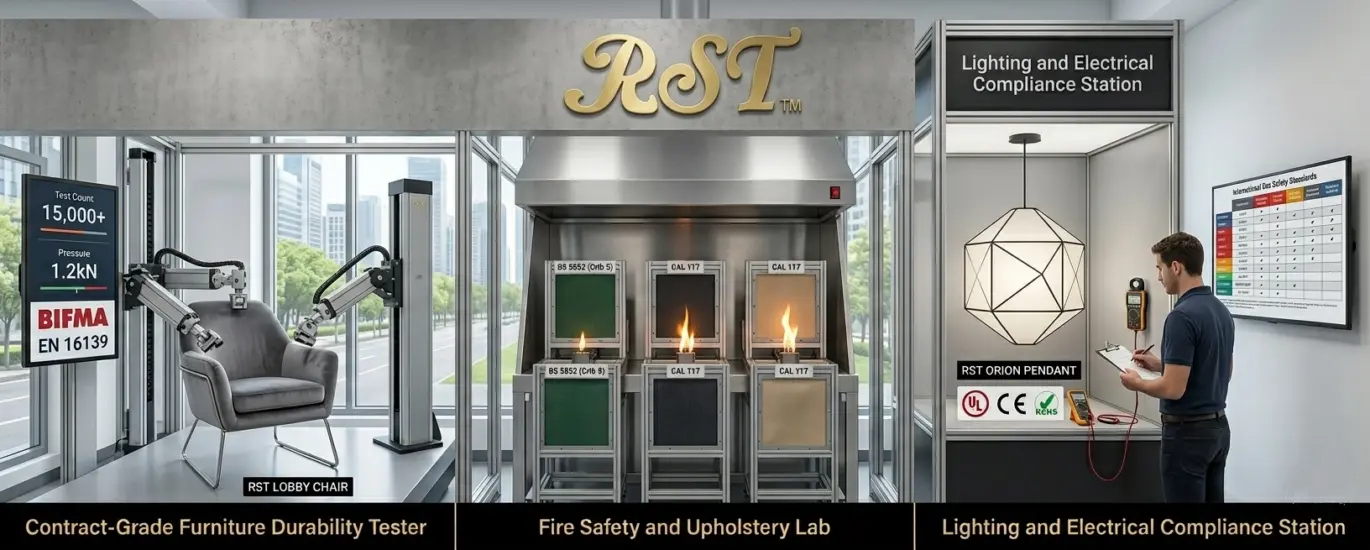
- Material Longevity: We specify industrial-grade capacitors in our smart drivers, rated for 50,000 to 100,000 hours of continuous operation, far exceeding consumer-grade alternatives.
Buy Now Rustic Sand Textured Ceramic Table Lamp with Smart AI Voice Control
RST Lighting Solutions: Frequently Asked Questions (FAQs)
Q1: How does RST ensure that its B2B Smart Lighting Integration Systems are compatible with existing Building Management Systems (BMS)? A1: RST systems are built on an “Open-Protocol” philosophy. We provide native support for DALI, KNX, and BACnet, which are the industry standards for commercial BMS. This allows architects and electrical engineers to integrate our lighting flawlessly into the overall building automation fabric, ensuring centralized control of lighting, HVAC, and security.
Q2: Can RST systems be configured for “Circadian Lighting” without complex manual programming? A2: Yes. Our [Smart Logic Controllers] come with pre-loaded astronomical clocks and latitude-based algorithms. Once the project location is set, the B2B Smart Lighting Integration Systems automatically calculate the local sunrise and sunset times to adjust the CCT (Correlated Color Temperature) and intensity, providing a true “Natural Light” experience indoors.
Q3: What level of technical support does RST provide for international contractors during the installation phase? A3: We provide a comprehensive “Digital Twin” of the lighting network before shipping. This includes detailed wiring schematics and a pre-commissioned software configuration. For large-scale B2B projects, we offer remote “Over-the-Air” (OTA) commissioning support, where our engineers can fine-tune the system parameters from our headquarters to assist on-site teams.
Q4: How do RST systems handle data security and guest privacy in a connected IoT environment? A4: Security is paramount. RST utilizes AES-128 bit encryption for all wireless communications within the lighting network. Our systems are designed to operate on a local VLAN (Virtual Local Area Network), isolated from the guest Wi-Fi, which prevents external unauthorized access and ensures that the lighting infrastructure remains secure and private.
Q5: Is it possible to scale an RST smart lighting system after the initial project completion? A5: Our systems are designed for “Modular Scalability.” Because we utilize Mesh and IP-based architectures, adding new zones or fixtures to an existing B2B Smart Lighting Integration System is as simple as adding a node to the network. This allows developers to phase their investment or easily adapt the space for future tenants without a full system overhaul.
Elevate Your Professional Portfolio
In the modern luxury market, the difference between a “space” and an “experience” lies in the intelligence of the light. Discover how [RST’s Integrated Smart Solutions] can provide your next project with the technical edge and aesthetic depth it deserves.