

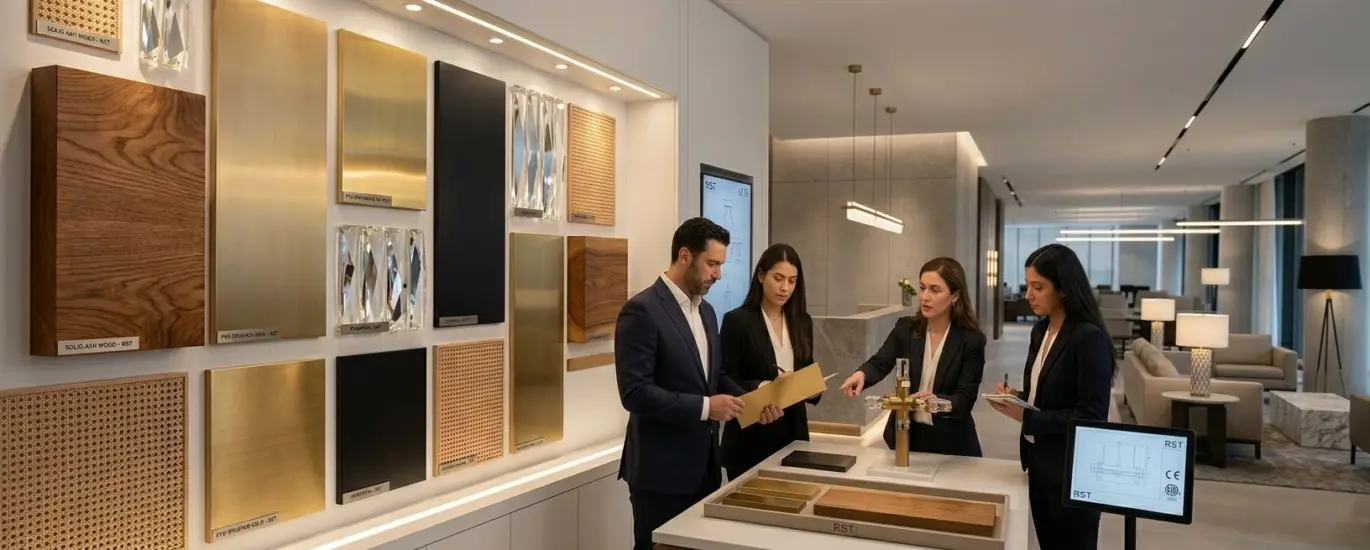
In the world of high-end B2B project development, architectural lighting materiality is the silent language that communicates luxury, durability, and intent. For interior designers, architects, and project developers, the selection of a lighting fixture is rarely just about the lumen output; it is a critical decision regarding how textures, finishes, and raw elements interact with the built environment.
At RST, we believe that the “Experience” of a space is dictated by the tactile and visual integrity of its components. Whether specifying for a five-star hotel lobby or a bespoke corporate suite, understanding the technical nuances of materials is essential to overcoming common industry pain points such as premature wear, aesthetic misalignment, and maintenance complexity.
Bridging the Gap Between Durability and Aesthetic Brilliance
One of the most persistent design challenges in the hospitality and bar furniture and lighting sectors is the degradation of finishes in high-traffic environments. Standard powder coatings often fail to retain their luster under rigorous cleaning or environmental stress.
To address this, RST utilizes PVD (Physical Vapor Deposition) Vacuum Plating. This advanced finishing process creates a surface that is significantly harder and more corrosion-resistant than traditional electroplating. When specifying gold, brass, or chrome finishes for coastal resorts or humid climates, this level of materiality ensures that the visual impact remains pristine for years.
The Synergy of Natural and Synthetic Elements
Luxury design is increasingly leaning towards “Biophilic Design,” which necessitates the use of authentic, high-quality natural materials. RST incorporates:
- Solid Ash Wood: Sourced for its incredible strength and elegant grain patterns, often treated to meet international fire-safety standards without losing its organic warmth.
- K9 Crystal: Unlike standard glass, K9 crystal offers a high refractive index and exceptional clarity, transforming functional light into a prismatic art form.
Precision Engineering for Diverse Professional Use Cases
The application of architectural lighting materiality varies significantly across different sectors, each requiring a specific material logic.
1. Luxury Residential and Private Villas
In residential projects, the focus is often on intimacy and “Human-Centric Lighting.” Designers frequently specify RST’s decorative table lamps because they combine solid wood bases with hand-finished metal accents, providing a sense of permanence and craftsmanship that mass-produced alternatives lack.
2. Modern Office and Corporate Spaces
In professional environments, lighting must facilitate productivity while reflecting brand prestige. Here, materiality serves a functional purpose. Anodized aluminum housing in RST linear fixtures provides excellent heat dissipation, ensuring the longevity of LED chips (up to 50,000 hours), while matte finishes prevent glare on digital screens.
3. High-End Hospitality and Boutique Hotels
For project developers, the scale of a hotel project demands materials that are both uniform and robust. RST’s commitment to using materials like Indonesian rattan or precision-cast metals ensures that whether you are installing 50 or 500 units, the quality remains consistent, meeting both CE and ETL certifications for global safety.
RST Frequently Asked Questions (FAQs)
Q1: How does RST ensure the quality of architectural lighting materiality in custom B2B orders? A1: RST employs a rigorous multi-stage quality control process. Each material, from the raw solid ash wood to the K9 crystal components, undergoes stress testing and visual inspection. For custom finishes, we provide physical “Master Samples” to architects and designers for approval before mass production begins, ensuring the final product matches the design vision perfectly.
Q2: What are the benefits of specifying RST’s PVD vacuum plating over standard finishes? A2: PVD (Physical Vapor Deposition) is an eco-friendly vacuum coating process that provides a much more durable finish than electroplating. It is highly resistant to scratches, tarnishing, and fading. This is particularly crucial for B2B buyers in the hospitality sector, where fixtures are frequently touched or cleaned with industrial-strength agents.
Q3: Does RST offer sustainable material options for LEED-certified projects? A3: Yes. Sustainability is a core pillar of RST’s materiality strategy. We prioritize responsibly sourced timber and recyclable metals like aluminum and brass. Our high-efficiency LED modules are designed to be replaceable, reducing electronic waste and supporting the circular economy in architectural design.
Q4: Can RST adapt the materiality of its fixtures to meet specific regional weight or safety requirements? A4: Absolutely. Our engineering team can modify material thicknesses and internal structures to meet specific project needs. For example, in earthquake-prone regions or high-ceiling hospitality foyers, we can utilize lightweight yet high-strength alloys to ensure safety without compromising the aesthetic scale of the fixture.
Q5: How do the materials used in RST lighting fixtures contribute to light quality (CRI and SDCM)? A5: Materiality affects light through reflection and diffusion. RST uses high-purity aluminum reflectors and optical-grade acrylic or crystal diffusers. These materials ensure that the high CRI (Color Rendering Index) of 90+ and low SDCM (Standard Deviation Colour Matching) of <3 provided by our LEDs are delivered to the space without color shifting or unnecessary light loss.
Redefine Your Project Standards with RST
Selecting the right materials is the first step toward creating an iconic space. At RST, we provide the technical expertise and premium materials required to turn architectural blueprints into luminous realities.
Download our Materiality and Finish Guide | Contact our B2B Consulting Team


