

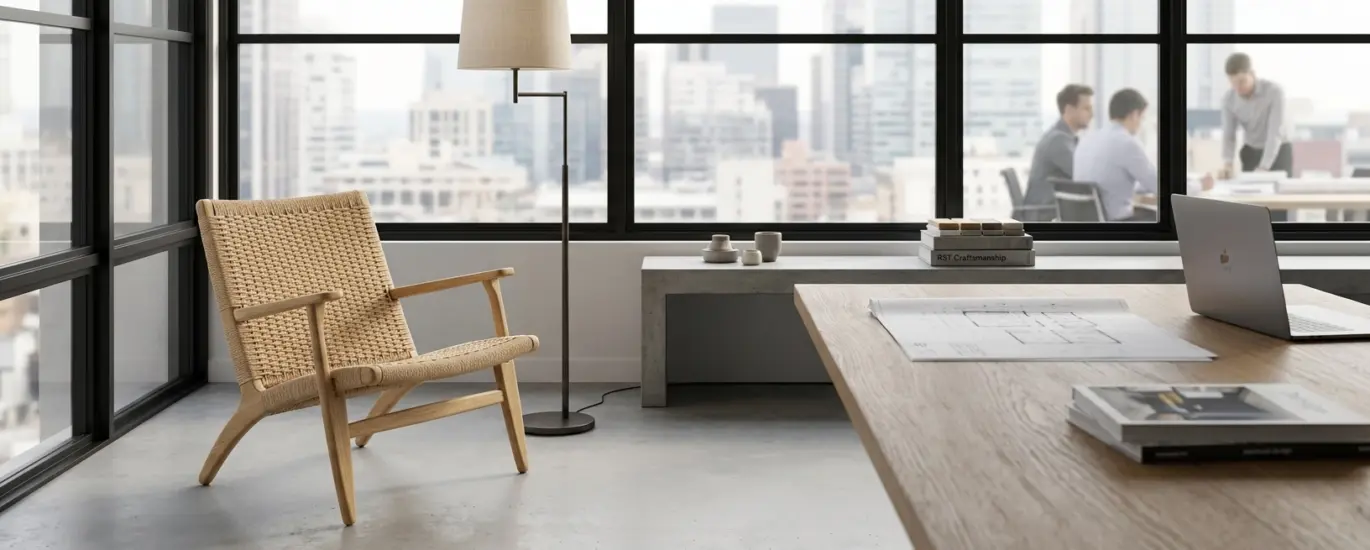
In the competitive landscape of luxury hospitality and high-end residential development, the intersection of heritage craftsmanship and environmental responsibility has become the new gold standard. For architects and interior designers, selecting the right furniture is not merely an aesthetic choice; it is a strategic decision that impacts user experience, project longevity, and brand narrative. Sustainable paper cord seating has emerged as a cornerstone of this movement, offering a rare synthesis of mid-century modern soul and 21st-century durability.
At RST, we recognize that procurement professionals face the dual challenge of meeting stringent sustainability mandates while maintaining a distinctive design edge. This article delves into the technical superiority of paper cord construction and how RST’s precision engineering solves complex design challenges for global B2B projects.
The Engineering of Longevity: Why Paper Cord Surpasses Synthetic Alternatives
For a project developer, the lifecycle cost of furniture is a critical KPI. While synthetic weaves may offer initial cost savings, they often fail to provide the breathability and structural integrity required for high-traffic environments like boutique hotel lobbies or executive lounges.
Technical Resilience and Material Integrity
RST’s paper cord is composed of three-ply high-quality FSC-certified paper, treated with a light wax coating to resist moisture and skin oils. Unlike plastic-based resins, paper cord possesses a unique “memory” property. Over months of use, the tension slightly adjusts to the sitter’s weight, creating a bespoke ergonomic experience without losing its original form.
In a commercial setting, durability is non-negotiable. Our weaving process involves over 400 meters (approx. 1,312 feet) of continuous cord, applied by master artisans. This manual tensioning ensures that the seat does not sag, even after thousands of use cycles—a common failure point in mass-produced contract seating.
Solving the Aesthetic Dilemma: Warmth vs. Minimalism
Modern office spaces often suffer from “sterile acoustics” and cold surfaces like glass and steel. Integrating ergonomic contract furniture crafted from natural paper cord introduces a necessary organic texture. This material acts as a visual and tactile softener, bridging the gap between residential comfort and professional functionality—a trend often referred to as “Resimercial” design.
Strategic Application: From Luxury Hospitality to High-Performance Workspaces
The versatility of the paper cord lounge chair allows it to transition seamlessly across various B2B sectors. Understanding the specific needs of each user group is where RST excels.
1. Luxury Hospitality & Boutique Hotels
In the hospitality sector, the lobby is the first chapter of the guest’s story. A lounge chair featuring a hand-woven seat signals an attention to detail and a commitment to authentic materials.
- Use Case: Strategic placement in guest suites or fireside lounges.
- Benefit: The natural breathability of the cord ensures comfort in both air-conditioned summer interiors and heated winter spaces.
2. High-End Residential Developments
For developers of luxury apartments, the goal is to provide “timeless” value. Our sustainable seating collections offer a neutral yet sophisticated palette that complements diverse interior styles, from Japandi to Industrial Loft.
- Specification: Available in natural or black stained finishes to match custom millwork.
3. Corporate Executive Suites & Coworking Hubs
The modern workplace is no longer just about desks; it’s about “breakout zones” that foster creativity. A paper cord lounge chair provides the necessary ergonomic support for informal meetings while conveying a sense of prestige to visiting clients.
Buy Now Mid-Century Modern Rubberwood Lounge Chair with Hand-Woven Paper Cord Seat
RST Brand: Frequently Asked Questions (FAQs)
Q1: How does RST ensure the durability of paper cord in high-traffic commercial environments? A1: RST utilizes a specialized 3-ply twisted paper cord that undergoes rigorous tension testing. For contract use, our chairs are treated with a proprietary, non-toxic finish that enhances spill resistance. With a lifespan of 20-30 years under normal use, our paper cord seating offers a superior ROI compared to upholstered alternatives that require frequent deep cleaning or fabric replacement.
Q2: Can RST customize the wood frames to match specific project color palettes? A2: Yes. We offer bespoke wood finishing for bulk B2B orders. Architects can specify sustainably sourced Ash, Oak, or Walnut, finished in custom stains ranging from matte natural to deep espresso. Our frames are joined using traditional mortise-and-tenon joinery, ensuring they meet the weight-bearing requirements of public spaces.
Q3: Is the paper cord used in RST furniture truly sustainable? A3: Absolutely. Sustainability is at the core of RST’s E-E-A-T values. Our cord is made from biodegradable, renewable paper pulp sourced from managed forests. Compared to the petroleum-based production of plastic wicker or synthetic foam, our paper cord seating has a significantly lower carbon footprint, helping your project achieve LEED or BREEAM certifications.
Q4: What are the maintenance requirements for paper cord seating in a hotel or office? A4: Maintenance is remarkably low. For daily care, a simple vacuuming with a soft brush attachment removes dust. In the event of a spill, a damp cloth with a mild soap solution is sufficient. Unlike fabric, it does not trap allergens or odors, making it an ideal choice for wellness-focused design projects.
Q5: What is the typical lead time for large-scale RST B2B procurement? A5: We understand the tight schedules of project development. Standard lead times for our core collection range from 8 to 12 weeks. For custom specifications, we provide a dedicated project manager to oversee the timeline from prototype approval to final on-site delivery, ensuring no delays in your project’s “Grand Opening.”
Conclusion: Partner with RST for Your Next Masterpiece
Choosing the right furniture partner is about more than just aesthetics; it is about finding a manufacturer that understands the nuances of professional specifications, durability, and global design trends. The RST paper cord lounge chair is not just a seat—it is a testament to sustainable luxury and engineering excellence.
Ready to elevate your project? Contact our B2B Project Team today to request a physical material sample kit or a 3D CAD model for your mood boards. Let’s build spaces that inspire.


